
Did You Know? The Balinese New Year on March 29, will bring Bali to a standstill for 24h, with no lights, music, transport halted, and everyone must stay home.
The Guardian Quote “After days of raucous celebrations, the Indonesian island shuts down for a day of silence – and tourists aren’t exempt. Try to sneak off to the beach and expect to meet the pecalang police
In Ubud, where I’m staying, shops are closing early, ATMs aren’t working and streets are being closed. From 6am tomorrow (28 March) until 6am on Wednesday (the date changes annually following the lunar calendar), no one will leave their home. Religious rules state there should be no traffic, no fire, no work and no pleasure. Streets are eerily empty, shops and restaurants remain closed, the beaches are shut, use of electricity is kept to a minimum, there’s no transport – even the airport closes – and the pecalang community police go on patrol, ensuring compliance and reprimanding anyone who steps outside their premises.” End of quote.
The Balinese New Year, known as Nyepi or the “Day of Silence,” is a unique and deeply spiritual celebration observed by the Balinese Hindu community. It marks the start of the new year according to the Balinese Saka calendar. Nyepi is a day dedicated to self-reflection, meditation, and purification.
Here are some key aspects of Nyepi:
- Date and Duration: Nyepi begins at 6 a.m. and lasts for 24 hours. In 2025, it will be observed from March 29th to March 30th2.
- Silence and Stillness: During Nyepi, the entire island of Bali comes to a standstill. No public activities are permitted, and everyone must stay indoors. There is no lighting, no noise, no travel, and no work2.
- Pre-Nyepi Celebrations: The day before Nyepi, known as Pengrupukan Day, is marked by loud and vibrant celebrations, including the Ogoh-Ogoh parade, where giant demon effigies are carried through the streets and later burned to drive away evil spirits2.
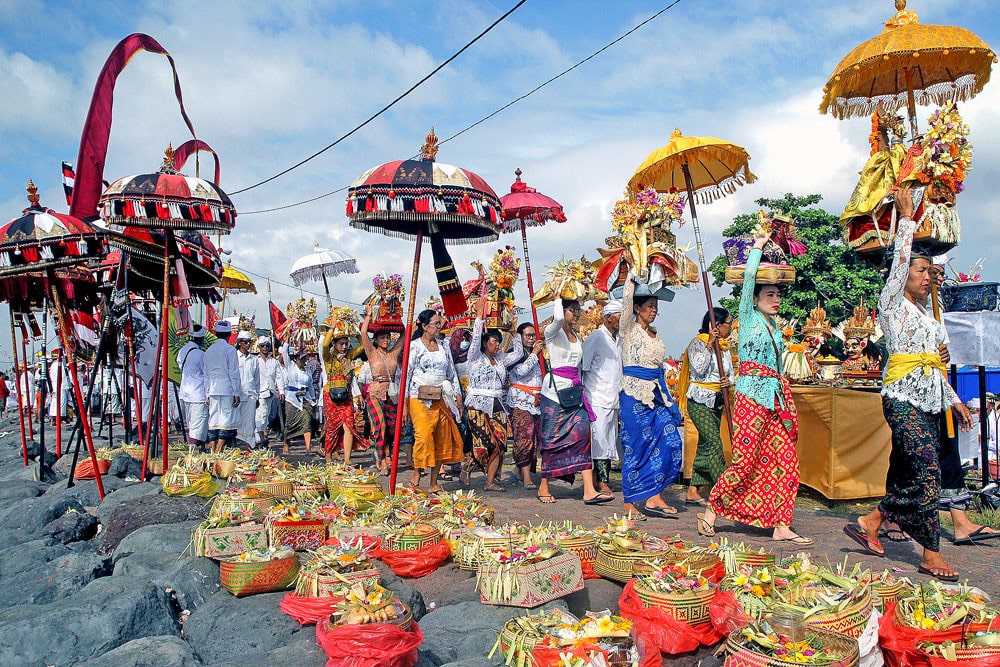
- Melasti Ceremony: A few days before Nyepi, the Melasti ceremony is performed, where sacred objects from temples are taken to the sea for purification2.
- Post-Nyepi: The day after Nyepi, known as Ngembak Geni, social activities resume, and families and friends gather to ask for forgiveness and perform religious rituals together2.
Nyepi is a time for introspection, spiritual renewal, and reconnecting with loved ones. It offers a unique opportunity for both locals and visitors to experience a profound sense of peace and tranquility.
If you ever get the chance to be in Bali during Nyepi, it’s an experience unlike any other!